UCSF Founders Clock Tower
San Francisco, CA
The Forgotten Treasure
While preparing the Master Plan for the University of California Medical Center in San Francisco, I unexpectedly discovered parts of a clock that had been forgotten in a storage facility. The parts were nearly one hundred years old.
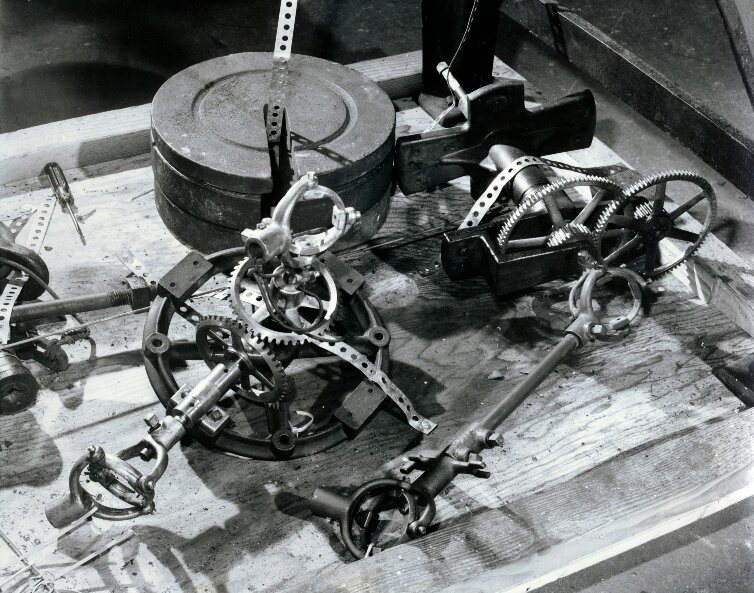
The clock had originally stood on the University's first Medical School building, constructed in 1897. When that building was demolished in 1967, the clock was dismantled and placed in storage. There it remained, waiting for someone to imagine its future.
For me, its discovery presented an extraordinary opportunity. The clock could be restored. But more importantly, it could once again become part of the life of the University.
The Campus Needed a Heart
As part of the Master Planning effort, my mission was to find ways to revitalize Parnassus Avenue. The campus had grown into a powerful collection of major medical and institutional buildings. The visitor was confronted by a multitude of structures with competing identities. The University Medical Center needed a recognizable center, a heart.
At the center of the campus stood a five-story stair tower.
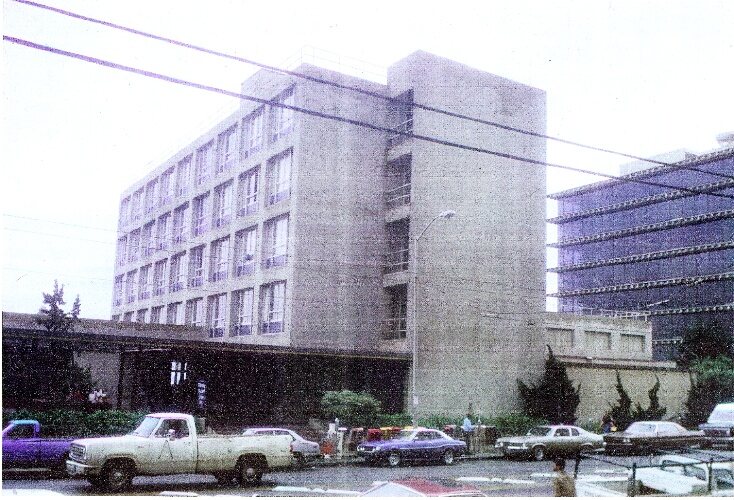
There was a great opportunity to restore the clock and place it in a permanent location in the center of the campus. We wanted to create a place of interest and identity, a centerpiece that would bring people together.
The historic clock was both a utilitarian object and an object of art, craftsmanship, history, and prestige. We can celebrate the remarkable human ingenuity represented by the original instrument! As the essential fascination of a historic clock is its movement, we need to allow people to see the movement, not only to read the time. Architecture has to reveal the wonder.
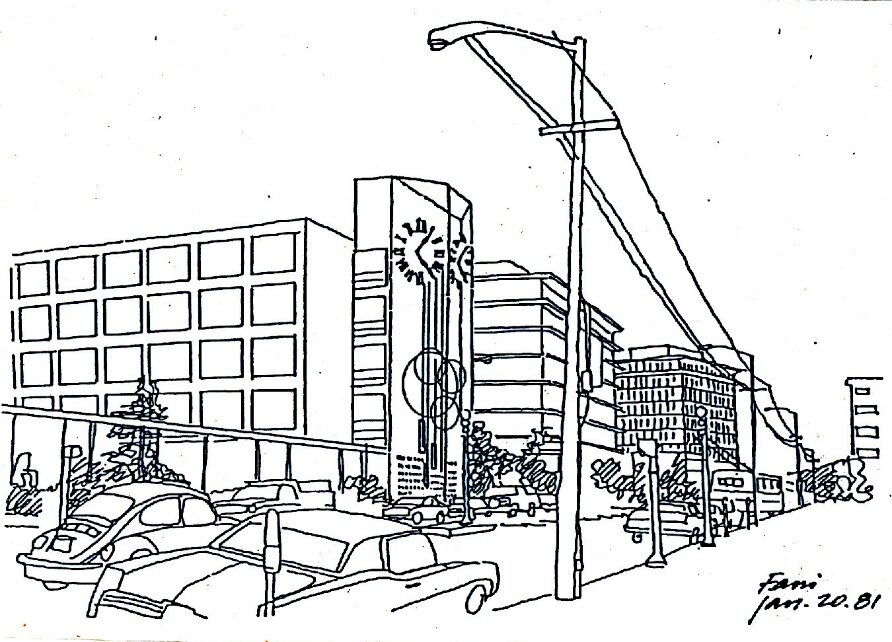
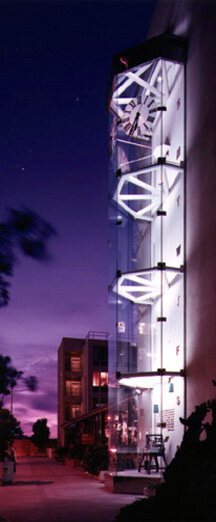
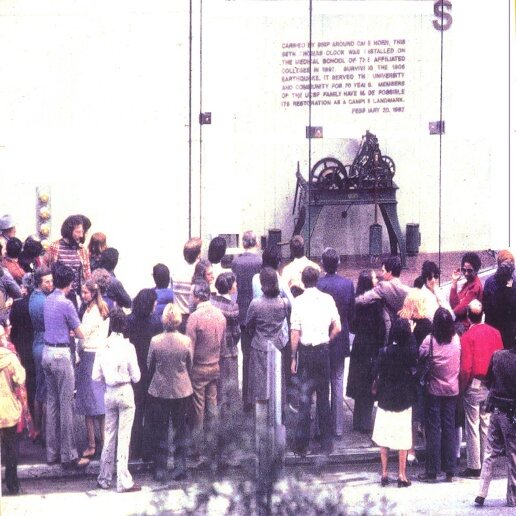
I placed the clockworks at sidewalk level, where people walking along Parnassus Avenue could see the mechanism at work. Displaying the human effort and ingenuity that went into creating the instrument as a centerpiece of the campus had to reveal the extraordinary invention.
The Clock can become part of the life of the medical campus. The wheels turn. The mechanism engages. Every hour during the course of the week, the wheels would come alive to activate the striking mechanism and the clock's weights would slowly descend, marking the passing hour.
The enclosure was conceived like a cut crystal, faceted to project three clock faces toward the campus and the surrounding community. A curtain of frameless glass was suspended from a steel lattice structure. The historic mechanism would no longer be hidden. It would become part of everyday life.
The University leading authorities responded favorably to the vision.
There was one major challenge, there was no budget.
How to create this visionary architecture without budget? Instrumental to its funding and implementation were the sketches that inspired funding participation. The sketches communicated the vision of what the clock tower could become.
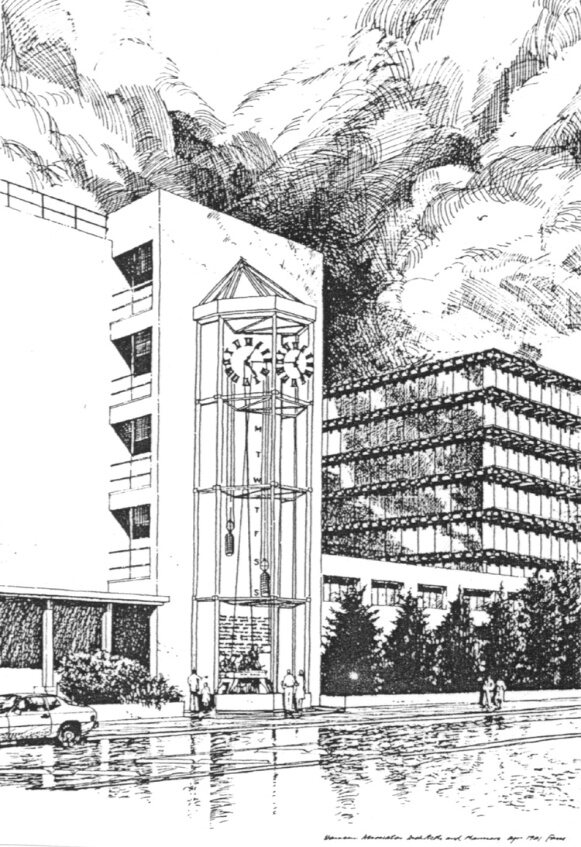
The feeling of excitement for the design pulled together all the forces on the campus to work together and make the project happen. The idea brought together University leadership and a donor who supported the project and ultimately created the heart of the campus.
The story was simple:
- The sketch idea was the seed.
- The leadership responding favorably, providing the soil
- Collaboration pulled together all the forces, bringing the sun and the water.
- The trust allowed the idea to grow, inspiring funding that made the project happen.
The historic clock mechanism was also restored and brought back to life.
There was another challenge. The implementation period was extremely short.
The University wanted the clock tower completed in time for Founders Day.
Parnassus Avenue is known for its powerful winds. The glass panels arrived during very stormy weather, only a few days before the opening celebration, Their installation required extraordinary skill and careful work under difficult windy conditions.
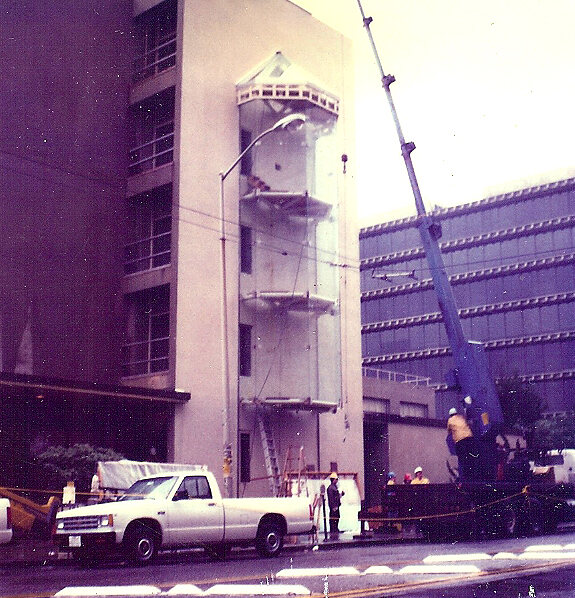
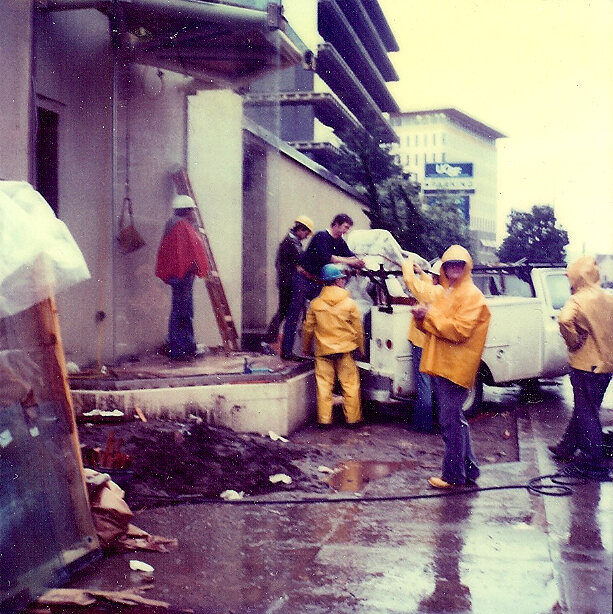
The completion became a race against time. During the dangerous storm, we struggled to install the glass enclosure in time for its dedication. The success of the project depended on many people bringing their knowledge, skill, imagination, courage, and commitment.
The historic clock’s movement would mark the passage of time, day by day.
Architecture Becomes Part of Life
Every Sunday, someone would come to participate in the life of the clock. A waiting list of people who want to take part in the ritual was established. The wheels will be turned, lifting the weights to the top of the tower. On Monday morning, the weights begin their movement from the top. Slowly, throughout the week, they descend. And on Saturday, they will be lifted again. We, too, need to renew our energy. And then we begin again.
This became more than the mechanical operation of the historic clock. It became a small reflection of life itself. For a medical campus where doctors, nurses, researchers, students, and staff devote their energy to healing and saving lives, this rhythm seemed especially meaningful. A day of renewal, a return of energy, and a new beginning. The historic clock became part of the life of the community.
People wrote to tell us what the clock had come to mean in their daily lives.
“Your service to the University of California, San Francisco is appreciated more than we can ever say.” Chancellor Francis A. Sooy
“The clock tower had given “so much pleasure” to those who had the opportunity to see it every day”. Mrs. Julius Krevans
“We all derive great pleasure from the clock, which has virtually become the campus symbol…it had become so much a part of Parnassus Avenue that it was difficult to remember the street without it”. Chancellor Julius Krevans, MD
Almost hundred years after its creation, the historic clock connects the University's past with its present. A project began as an idea. The idea becomes a sketch. The sketch brings people together. People share their knowledge, resources, skill, and trust. And eventually, something that did not exist before becomes part of people's lives. That is the real success of Architecture.
The Clock Tower was later selected for the major architectural exhibition “Women in American Architecture — 1888 to 1988,” recognizing a century of women's contributions to the design of the built environment.
The Clock Tower has since become a campus landmark and has significantly improved the urban landscape on Parnassus Avenue.
Years after the Clock Tower was completed, I received an urgent telephone call from a friend. He was admitted to another hospital and was scheduled for surgery the following day his leg will be amputated. I asked:“Have you received a second opinion?” He had not.
I immediately called UCSF and asked for the name of an outstanding vascular surgeon. I was referred to Dr. Louis Massina, Chief of the Vascular Division, a distinguished surgeon known for his outstanding work in vascular repair and research.
Dr. Massina was extremely busy. His assistant explained that he had surgeries scheduled for the day and would not have time to see anyone. Understanding the urgency, she kindly connected me with Dr. Massina. I explained the situation. I told him “I am the architect for the UCSF Clock Tower.” There was a pause. Then everything changed.
Dr. Massina shared his experience with the Clock Tower. He was in surgery late after midnight the previous Saturday. Exhausted, he had looked toward the Clock Tower. It meant to him, “hope”. Then he said: “It is a great design, I will do my best to go to Marshall Hale Hospital and see your friend today”.
The connection was immediate and completely unexpected.
Dr. Massina went, examined, and canceled the amputation. My friend's life continued, not for days or months, but for many decades. Something that neither of us could have anticipated.
The clock measured time and In an unexpected way give someone more time.
This experience gave the Clock Tower a meaning I could have never imagined when I found in January 1981 forgotten historic clock parts and expected to give them a new life that 18 years later, in June 1999, the Clock will create an unexpected human connection. A surgeon recognized the place. The place led the doctor to a patient who received many years of life.
Architecture creates places that enter people's lives. The Clock Tower gave history a place in the present and future.
Places create identity, preserve legacy, bring people together. And sometimes, in ways that no architect can predict when making the first sketch, a place changes life.
See the built project: Parnassus Avenue, San Francisco →
See what people say: UCSF Founders Clock Tower →