Community Preservation
Waterfront Park, Tiburon, CA
What happens when a community realizes that it may lose something forever?
By chance, on one Sunday afternoon walk at Tiburon railroad yard in 1973, where the rails were in process of removal, Gary and I met a neighbor, Bruster Morris. We wondered what the future plans for the area would be. We decided to find out.
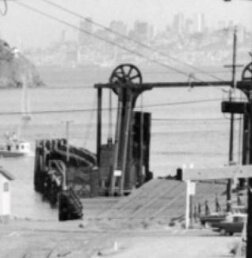
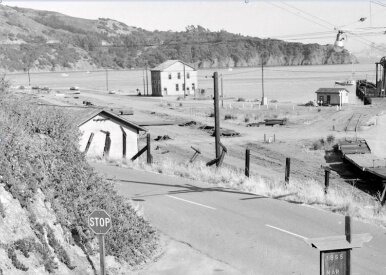
The next day, connecting with the city, we found out that there was a big development planned for in accordance with the current 1970 General Plan. The approval was to take place shortly. Downtown Tiburon was at a critical moment.
The Development plans considered would substantially change the character of the Bay area and town of Tiburon. The envisioned plan was dominated by automobiles, parking, high-rises and commercial development. Along the waterfront, open space was drastically reduced, while marinas and other development occupied land and water.
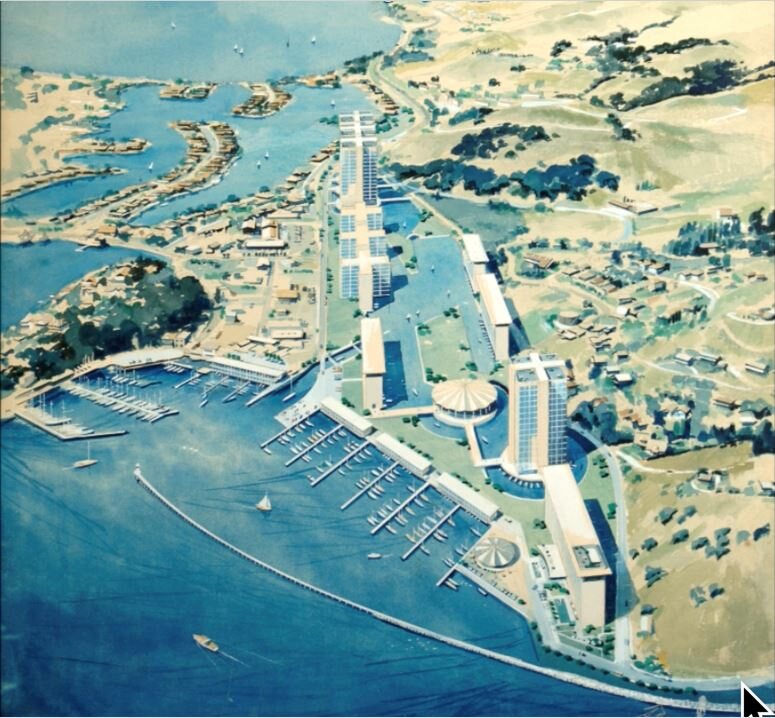
Very few residents were aware of it. We had only a few months to prepare a response that could make the consequences visible, and organize a community to act. If we did not act quickly, the waterfront could be committed to development and gone forever.
The question was: How to present the issue to the community as simply as possible? We had to review the proposed development, its environmental report scientifically, present the idea of open space by talking to as many people as possible around the city, both towns of Tiburon and Belvedere, form a committee, meet for strategy talks, prepare a petition, collect signatures, and hopefully turn the idea into a reality.
People had to understand, care, and act.
Our small group of 3 increased to 5 by adding 2 residents from 1868 Mountain View Drive in Tiburon, who generously offered their time, trust, support, and their home for meetings. In October 1973 our small group of 5 enlarged to 20 and the Committee for a Downtown Plan Review was formed. This was an attempt to give the community a voice in defining the future of our town.
We needed an instrument for fast communication. Gary and I offered to produce a map that can transform a complicated planning proposal into something people can understand visually. The map had to be distributed to the community for information, support, and for collecting signatures prior to the Planning Commission meeting scheduled for early December. At that time, I was responsible for the design of Amarillo Medical Center in Texas, a 312 patients bedroom center while Gary was in charge of master planning the VA hospitals throughout US. The need for the map was an extraordinary race against time. It was urgent. There was no technology available to speed up the process at that time. The only time available was the night.
We produced the map by hand, in color, showing streets, parking, buildings, water and new development. One could see at once that there was no open space along the waterfront. ,
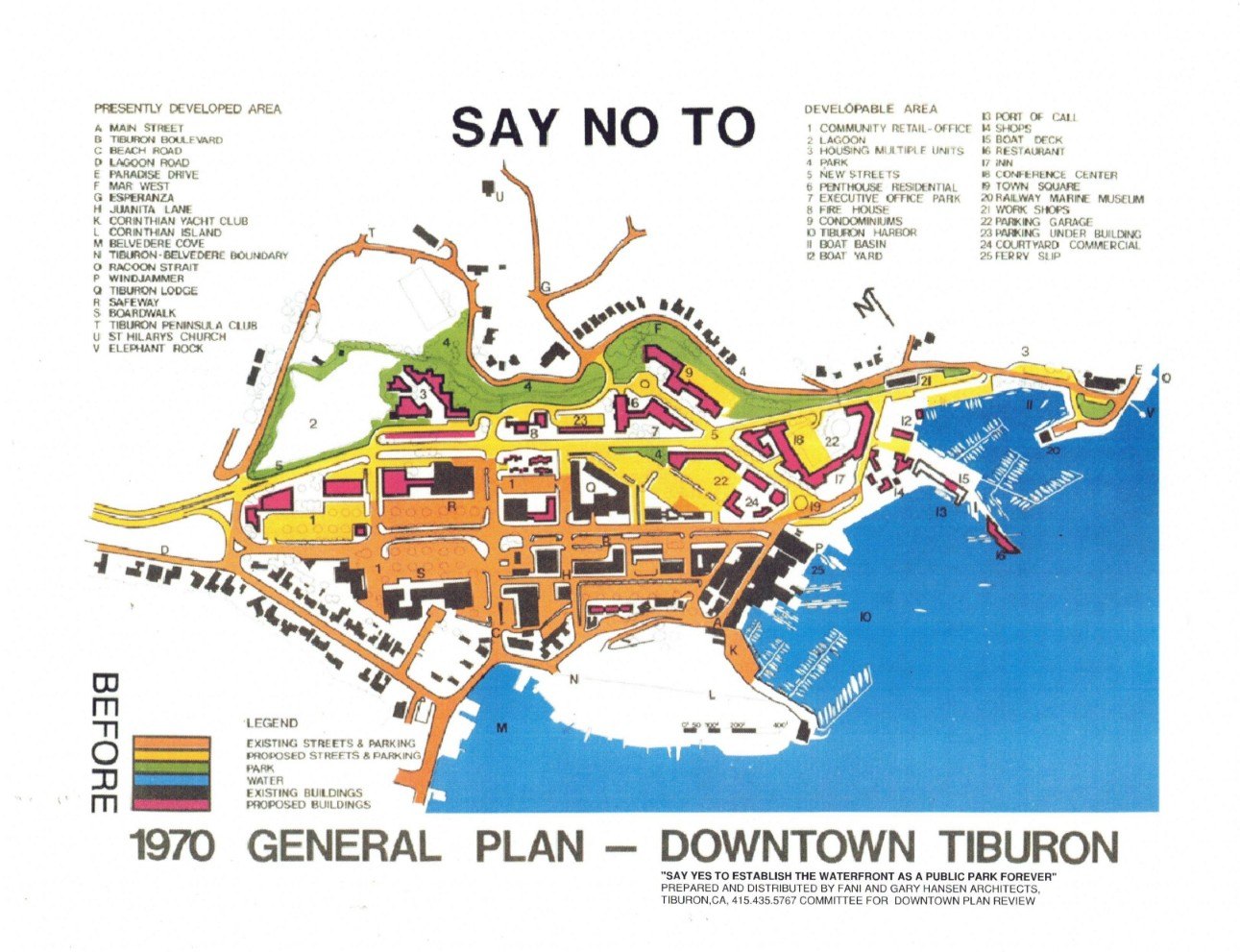
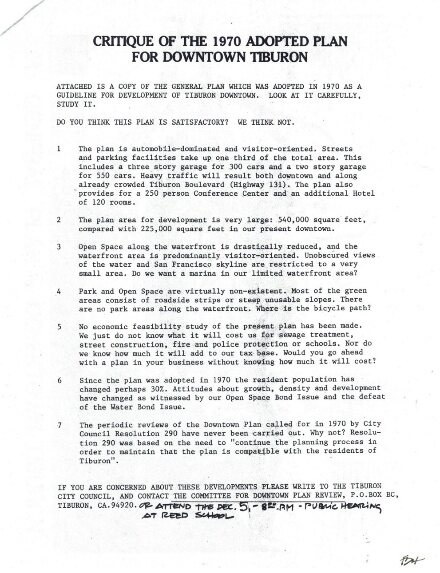
We attached a petition, critique of the 1970 plan, to the map for information, distributed it to as many mail boxes in the area as possible, and started collecting signatures door to door.
Something remarkable happened. The map made the future visible. SAY NO TO the plan grew rapidly. The community saw what could be lost and organized quickly enough to influence the political process. The petition gave the community a collective voice and People came together contributing their knowledge. Within a matter of a month, the idea that might otherwise have disappeared into a development plan became a public cause.
People brought their concerns to the Planning Commission on December 5, 1973, focusing specifically on protection of the Tiburon waterfront.
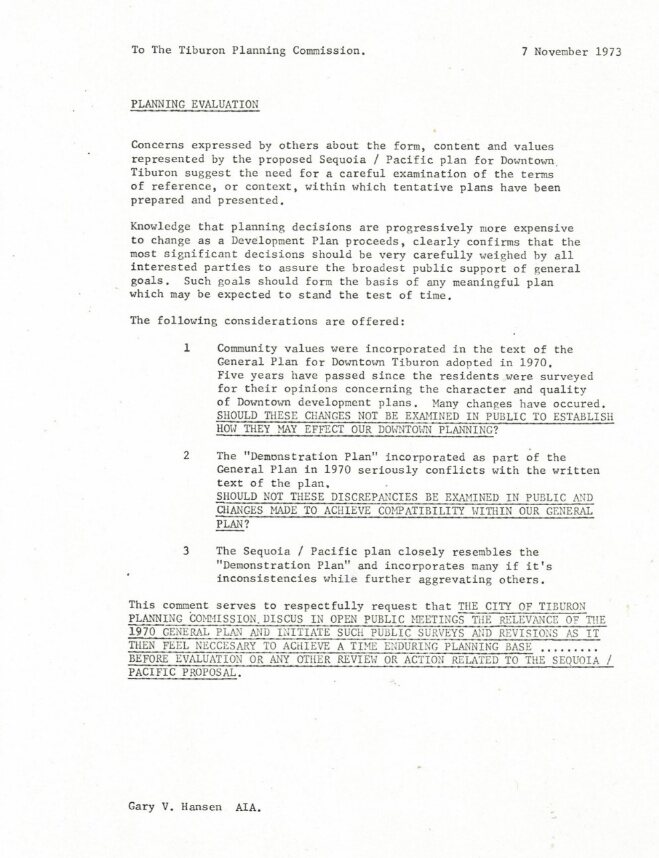
Gary's presentation at the Planning Commission meeting examined the planning process that could determine Tiburon’s future. Focused on planning evaluation, he explained that planning decisions become progressively more expensive to change as development proceeds. The major decisions needed to be carefully examined while there was still time to change them. He called for public discussion, surveys and revision before further action on the development proposals can be made:
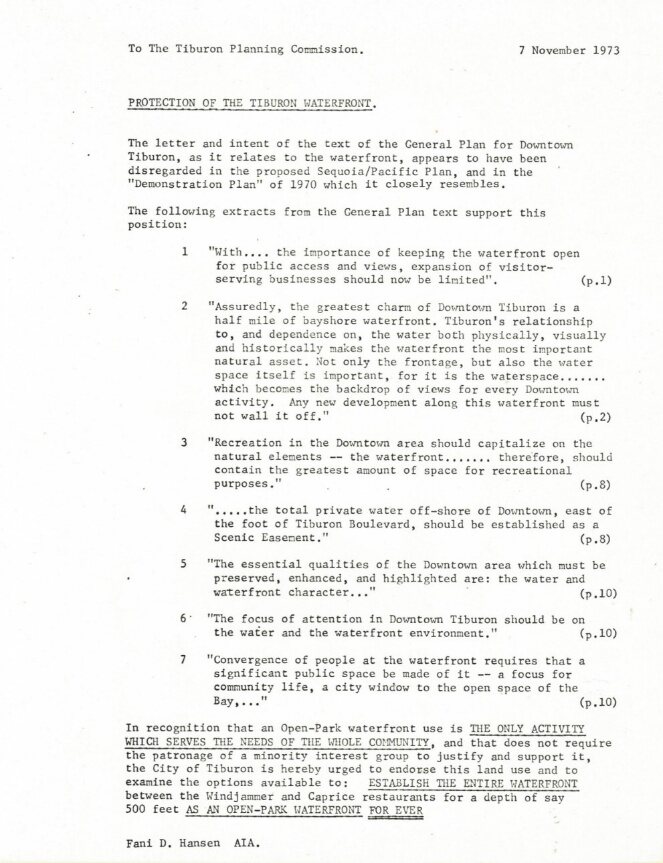
My request was direct for protecting the waterfront as a place: “ESTABLISH THE ENTIRE WATERFRONT between the Windjammer and Caprise restaurant for a depth of say 500 feet
AS AN OPEN-PARK WATERFRONT FOR EVER.”
The community message was equally clear. It pointed out that the proposed plan devoted an enormous amount of land to automobile and development facilities while drastically reducing waterfront open space.
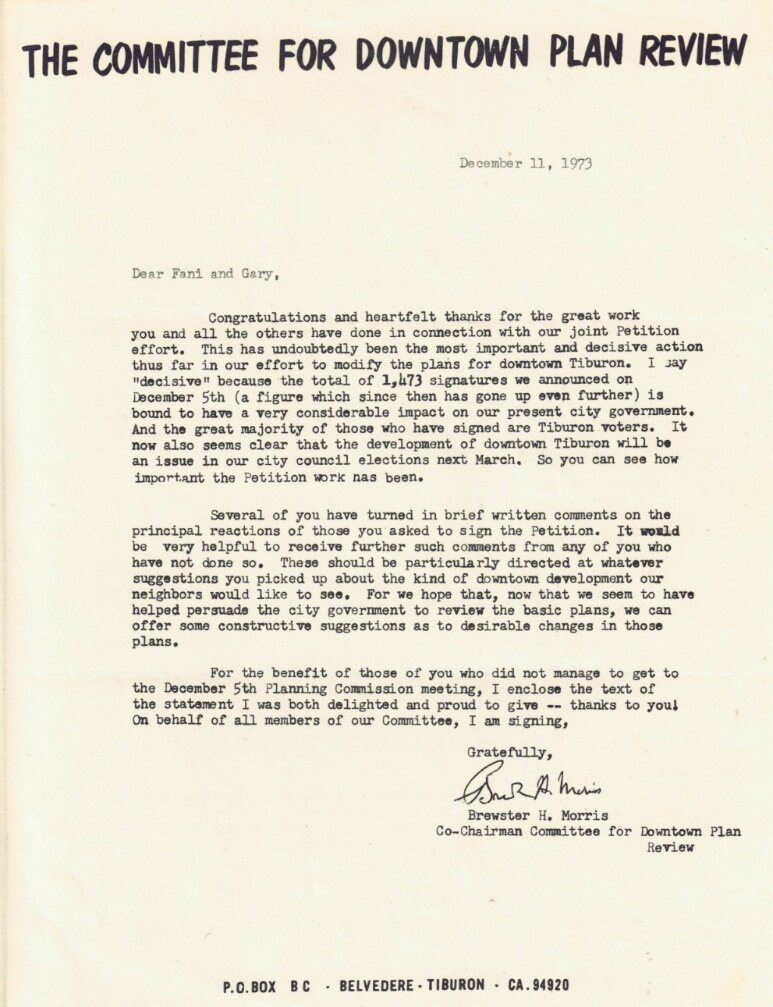
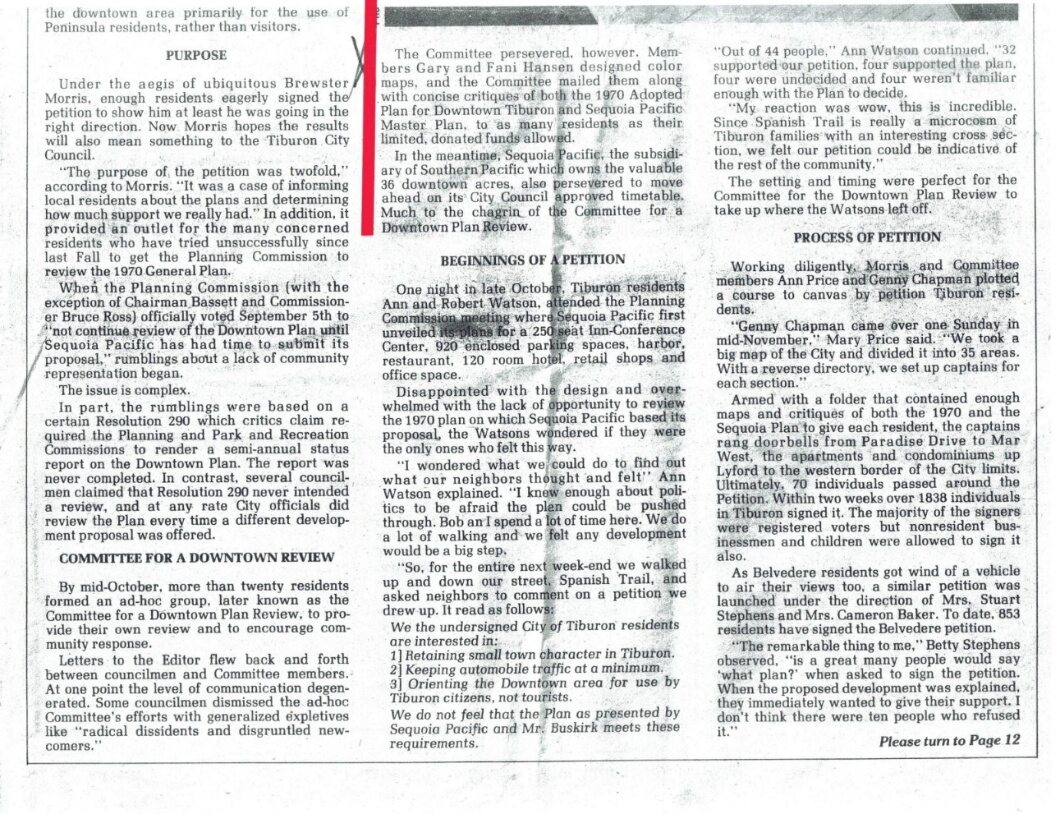
A December 11, 1973 letter from Brewster H. Morris, Co-Chairman of the Committee for Downtown Plan Review, captures the importance of those few months. He called the petition effort “the most important and decisive action” taken to modify the plans for downtown Tiburon and emphasized the significance of the signatures presented on December 5 at the Planning Commission meeting. He also recognized that the development of downtown Tiburon had become an issue “in the coming city election”- save the place before it disappeared.
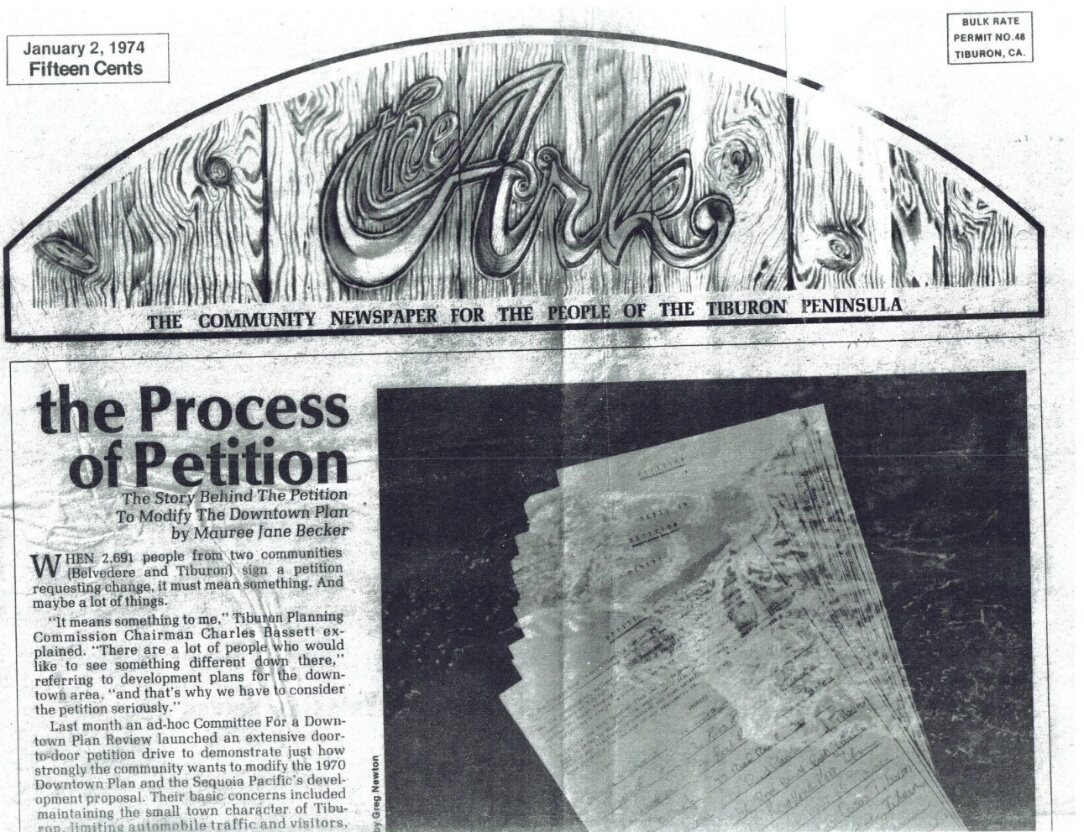
The January 2, 1974 issue of The Ark newspaper documented the remarkable process by which residents organized themselves, circulated a petition and brought their concerns to the Planning Commission and City Government and reported that 2,691 people from two communities signed a petition requesting changes to the downtown plan. It reveals how carefully the case was constructed,
Architecture is not only about creating buildings. It is about seeing possibilities and bringing people together. It is protected the land so that a better future could become possible.
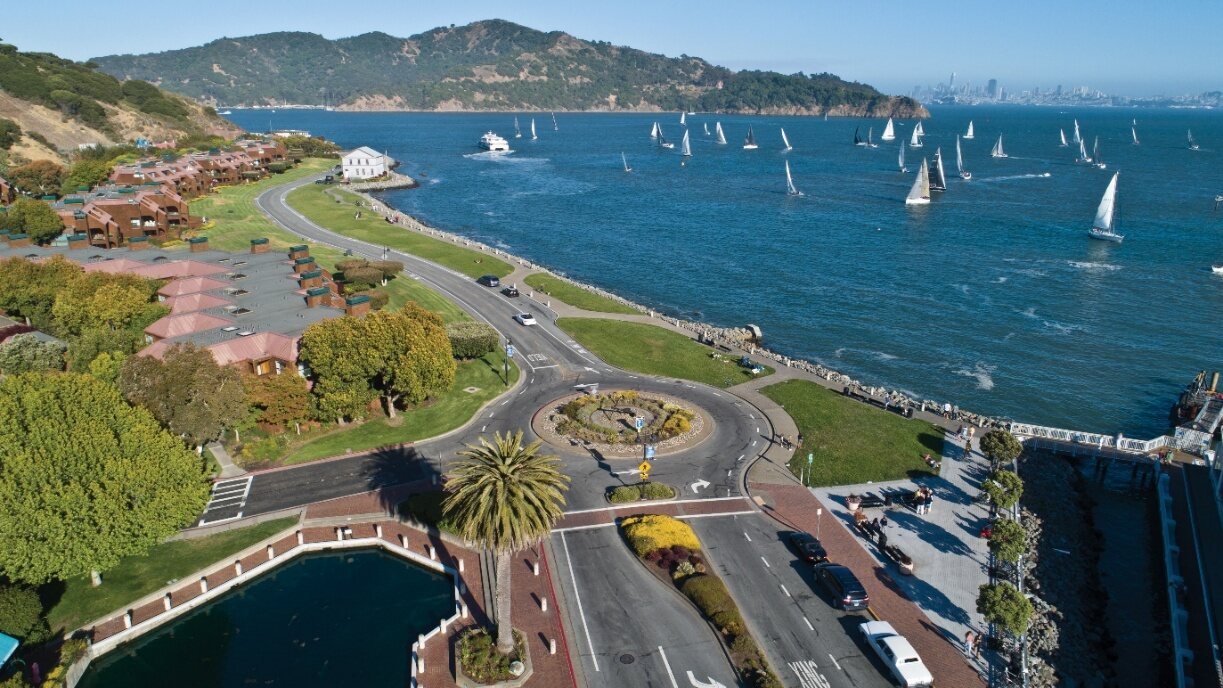
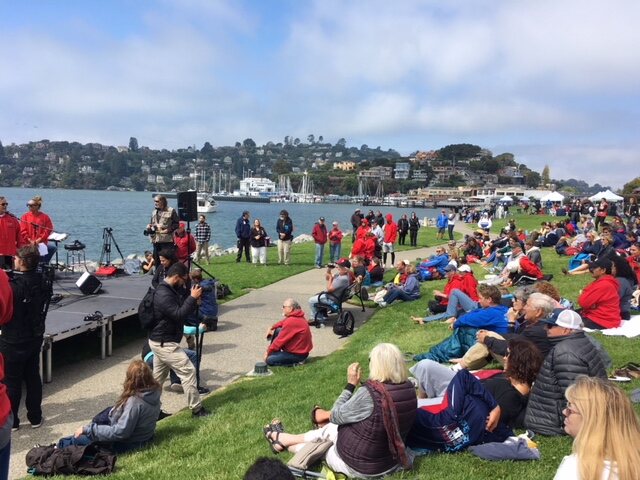
When architecture begins with people, when ideas are shared, when collaboration creates trust, the architecture becomes an instrument for improving life. Years later, the waterfront park became a physical place. The architecture became visible.
That was The Gift.
See the built project: Tiburon Waterfront Park →
See what people say: Community Preservation →